Economic Justice
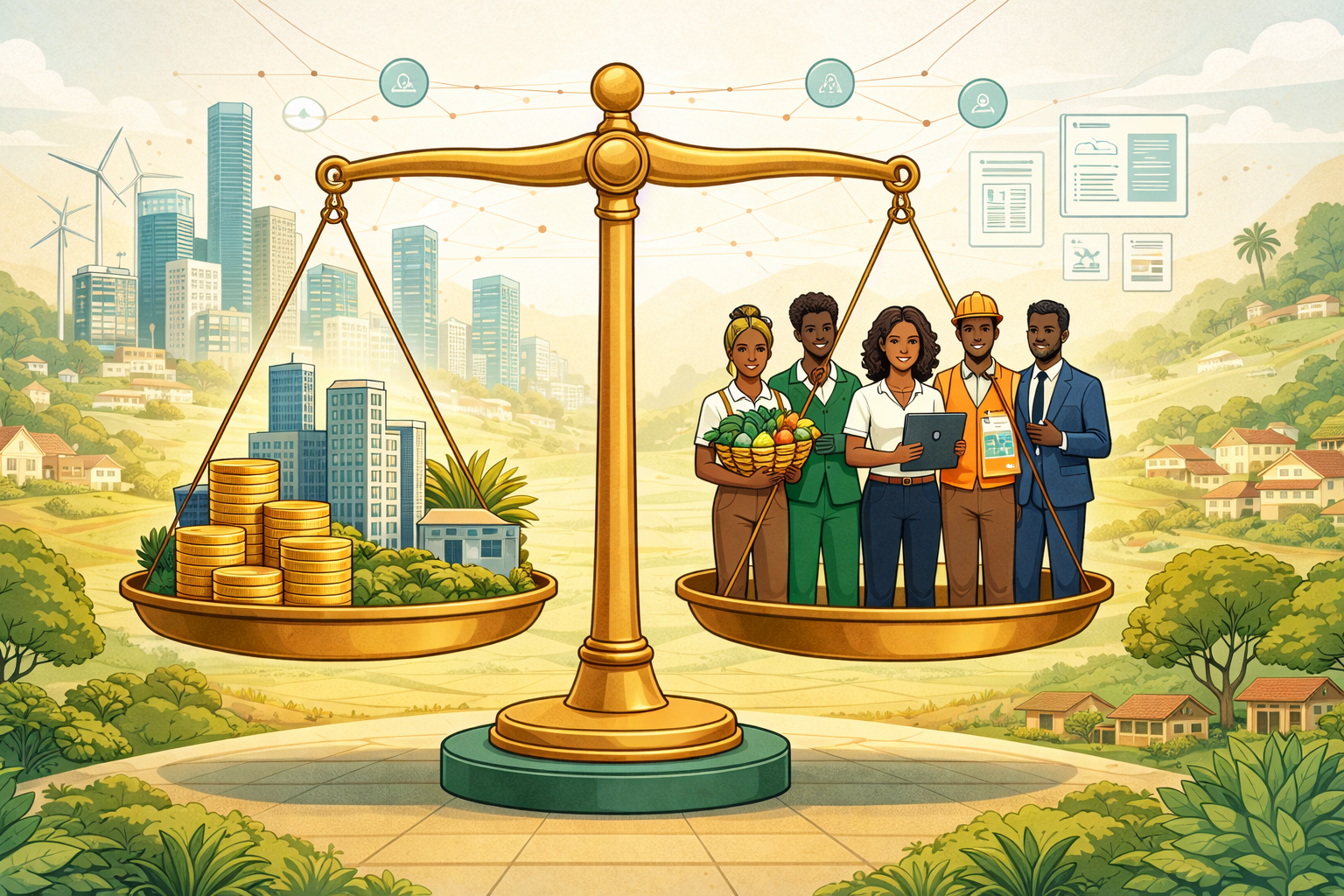
Economic justice is a multifaceted thematic area that revolves around the pursuit of fairness, equity, and equality within economic systems. It addresses the imbalances, disparities, and structural inequalities that emerge due to income gaps, wealth concentration, discrimination, and unequal access to resources and opportunities.
Sustainable Jamii's central objective is to rectify income inequality. We advocate for policies and measures that promote a more equitable distribution of income — including progressive taxation systems, minimum wage laws, and social safety nets.
Access to basic necessities is a fundamental aspect of economic justice. Every individual should have access to essentials like healthcare, education, housing, clean water, and adequate nutrition. We endeavour to eliminate disparities in access to these basic needs, particularly for marginalised communities.
Access to Justice
Sustainable Jamii has equipped access to justice as a fundamental pillar of economic justice, as it empowers individuals to navigate and challenge economic systems that may disadvantage them.
Access to justice within the context of economic justice ensures individuals and communities have the means to address economic inequalities, seek remedies for injustices, and uphold their rights — encompassing the right to a fair legal process, the ability to challenge economic disparities, and the opportunity to hold institutions accountable.
Access to justice also facilitates the participation of marginalised populations in economic decision-making processes — empowering voices to challenge unjust economic policies and shape a more inclusive and responsive economic system.
Financial Literacy among the Youth
Financial literacy among today's youth is a pressing concern. Many young individuals lack essential knowledge about managing money, budgeting, and making informed financial decisions — leading to debt, poor credit, and limited economic opportunities.
To address this, comprehensive financial education programmes are integrated into school curricula and community initiatives. Empowering youth with practical skills like saving, investing, and understanding credit helps them navigate the complexities of the modern financial world.
By promoting financial literacy, we equip young people with the tools they need to make responsible financial choices, achieve financial stability, and build a secure future.
Governance & Accountability
African Youth Charter (AYC): We advocate for laws, regulations, and markets to work in favour of marginalised groups. We mobilise citizens, policymakers, and other actors in Eastern, Central, and Southern African regions to ratify the African Youth Charter — endorsed on 2 July 2006 by African Union Heads of States. The Charter is a political and legal document serving as a strategic framework for youth empowerment at continental, regional, and national levels.
East African Youth Leaders Programme: Sustainable Jamii works with youth leaders to deepen awareness of the African Charter on Democracy, Elections, and Governance. We work with parliaments and local governments in 4 EAC Member States to improve the representation of women, young people, and people with disabilities in monitoring executive actions.
Parliamentary Support Programme: Our programme provides Kenyan youth with a mechanism to directly engage Kenya's National Assembly in the lawmaking process through the relevant parliamentary departmental committees and the Kenya Young Parliamentarians Association (KYPA). Sustainable Jamii serves as the prime informant on youth issues in the Parliamentary Youth Forum.
Our Programmes
Get Involved
Join Sustainable Jamii in creating real change for young people across Kenya.
Contact Us